Neurology Residency: The journey to a United States residency is often described as a marathon, but for many international medical graduates (IMGs), it feels more like navigating a labyrinth without a map. However, some stories stand out not just because of the destination, but because of the grit and authenticity displayed along the way.
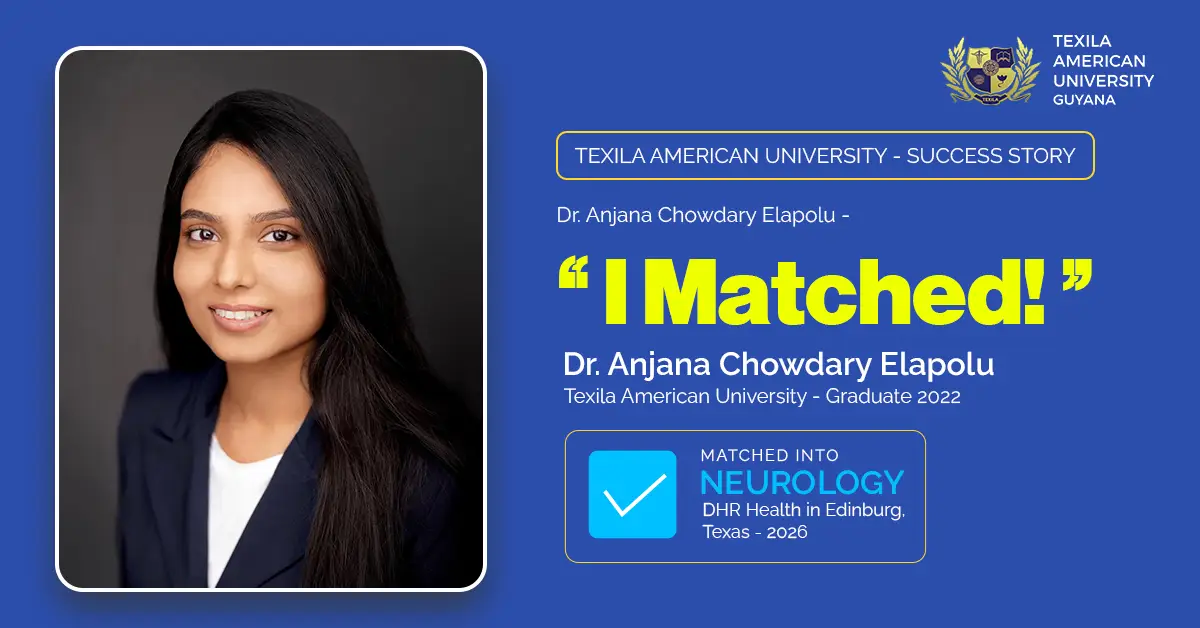
One such story is that of Dr. Anjana Chowdary Elapolu, a proud graduate of Texila American University (TAU). In October 2022, Anjana completed her medical degree and set her sights on a goal that many dream of but few achieve: a residency in the United States. Today, she is a Neurology resident at DHR Health in Edinburg, Texas.
Her journey from India to the heart of Texas is a testament to the fact that while scores matter, it is your resilience, clinical exposure, and the foundation provided by your institution that ultimately seal the deal.
The Spark: Why the United States?
For Dr. Anjana, the motivation wasn’t born in a classroom; it was ignited in the wards. During her clinical rotations in the USA a core component of the Texila American University experience she witnessed the American healthcare system’s precision firsthand.
That was the first time I saw the US system up close the structure, the way teams function, and the kind of responsibility residents have,” Anjana recalls. “It made me realize this is the kind of training that would push me out of my comfort zone and actually shape how I think as a clinician.”
This exposure is where Texila graduates gain their competitive edge. By integrating students into the US clinical environment early, TAU ensures that the transition from student to resident isn’t just a dream, but a calculated progression.
Building a Profile Without a “Template”
The residency application process is notorious for its complexity. Many applicants fall into the trap of trying to “game” the system by following generic templates. Dr. Anjana took a different, more human approach.
She focused on three main pillars:
- Academic Excellence: Clearing exams with a focused, steady approach.
- Clinical Exposure: Leveraging rotations to build a CV that spoke of real-world experience.
- Personal Authenticity: Crafting a personal statement that reflected her true self, not a polished version of what she thought programs wanted to hear.
I didn’t do everything perfectly or in a straight line,” she admits. “I spent a lot of time understanding where I stood realistically and tried to strengthen those areas instead of blindly following what others were doing.”
Overcoming the “Comparison Trap”
One of the most significant hurdles for any medical student is the psychological toll of the Match season. Dr. Anjana faced a common challenge: seeing peers with “stronger” paper profiles fail to match.
It really shakes your confidence,” she says. “There was a point where I questioned if I was even competitive enough.”
How did she overcome it? Through sheer persistence. She stopped looking at the “perfect formula” and started trusting her own process. This mental fortitude is a hallmark of Texila students they are trained to be as resilient as they are knowledgeable.
Practicality Over Prestige: Managing Time
Residency preparation is a balancing act. Dr. Anjana’s strategy was rooted in practicality. She avoided the “fluff” and focused on high-yield activities. Instead of pursuing every possible certification, she prioritized meaningful clinical rotations and deep preparation for the tasks at hand.
By focusing on one phase at a time first the exams, then the clinicals, then the interviews she managed to avoid the burnout that often plagues IMG applicants.
The Interview: Finding the Right “Fit”
When it came time for interviews, Dr. Anjana discovered that the secret to success wasn’t memorizing answers. It was about being comfortable in her own skin.
She practiced talking out loud and reflected deeply on her journey. When she sat down with the faculty at DHR Health, she wasn’t just another applicant; she was a colleague in the making.
You don’t need a ‘perfect’ interview to match,” she reflects. “It’s not just about impressing the program, it’s also about where you feel you fit.”
Why Texila American University is the Key
Dr. Anjana’s success in matching into a specialized field like Neurology highlights why Texila American University remains the premier choice for aspiring doctors.
- Global Recognition: Texila American University Guyana provides the curriculum and support necessary to meet US standards.
- Clinical Strength: The university’s emphasis on US clinical rotations prepares students for the rigor of the American system.
- Support System: From mentors who provide honest feedback to a peer group that offers emotional support, Texila creates a community that carries you through the “Match” stress.
Dr. Anjana notes that her mentors played a crucial role in her decision-making process, providing the guidance needed when the path forward seemed unclear.
A Future in Neurology
Now settled in Edinburg, Texas, Dr. Anjana’s goals are clear: she wants to become a “solid neurologist” and eventually pursue a fellowship. But beyond her clinical duties, she feels a calling to give back.
I see myself being involved in teaching and mentoring because I know how confusing this journey can be. If I can help even a few people navigate it better, that would mean a lot.”
For students back home in India or currently studying at Texila, Dr. Anjana’s advice is simple: Don’t look for a fixed formula. The Match is about consistency, personal growth, and choosing an institution that stands by you.
Texila American University isn’t just a medical school; it’s the starting point for careers that cross borders and change lives. If you are ready to follow in the footsteps of Dr. Anjana Chowdary Elapolu, your journey to the US Match starts here.
People Also Asked: Residency Match FAQ
1. Can an IMG match into a specialized field like Neurology?
Yes. While some specialties are more competitive, IMGs like Dr. Anjana successfully match into Neurology every year. Success depends on strong US clinical experience, solid exam scores, and a personal statement that demonstrates a genuine interest in the field.
2. How important are US clinical rotations for the Match?
US clinical rotations are arguably the most critical part of an IMG’s application. They provide the necessary Letters of Recommendation (LoRs) from US physicians and demonstrate that the candidate can function effectively within the American healthcare system.
3. What should I do if my profile doesn’t look “perfect” on paper?
As Dr. Anjana’s story shows, a “perfect” profile isn’t a requirement. Focus on being honest about your journey, showing persistence, and building a CV that highlights your clinical strengths and growth over time.
4. How does Texila American University help with the US Residency Match?
Texila provides a structured path for students, including a curriculum aligned with USMLE standards and opportunities for clinical rotations in US hospitals, which are vital for securing a residency position.
5. Is it possible to match with your last choice on the rank list?
Absolutely. The Match algorithm is designed to favor the student, but it is unpredictable. Dr. Anjana matched with her last choice and is now thriving in a high-quality Neurology program. The goal is to match; once you are in the system, your performance as a resident is what defines your career.