
- Quick Summary
- Choosing Caribbean MD in 2026
- Key Takeaways
- 1. The 2026 Healthcare Landscape in the Middle East
- 2. Global Recognition: Why It's the "Gold Standard"
- 3. Career Outcomes: Securing High-Paying Doctor of Medicine Jobs in the Middle East
- 4. The "US Clinical Experience" Advantage
- 5. Tailored Support for Middle East Applicants
- 6. The 2026 Curriculum: Medicine Meets AI
- 7. How to Apply: A Step-by-Step for GCC Residents
- Conclusion: Choosing Caribbean MDs
- FAQ
Quick Summary
For Middle East students, a Caribbean MD can offer an international route to medical education, especially for those seeking English-medium instruction, US-style curriculum exposure, clinical training pathways, and future licensing opportunities across regions such as the GCC, the United States, and beyond. As healthcare systems in the UAE, Saudi Arabia, Qatar, Oman, Kuwait, and Bahrain continue to expand, students are increasingly comparing medical schools based on recognition, clinical rotations, licensing preparation, and long-term career mobility.
Choosing Caribbean MD in 2026
Choosing a medical school is the most consequential decision an aspiring physician will make. For students in the Middle East, spanning from the high-tech hubs of Dubai and Abu Dhabi to the expanding healthcare landscapes of Riyadh and Doha, the stakes are even higher. In 2026, the medical profession is no longer just about healing; it is about global mobility, technological fluency, and securing a position within the top medical schools worldwide.
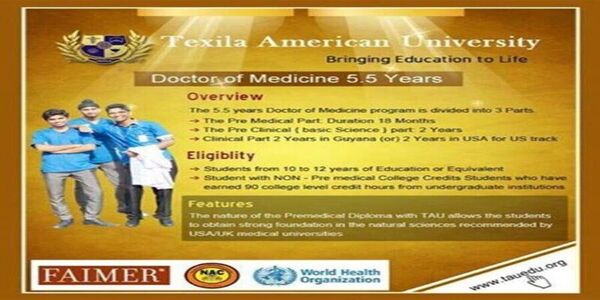
Texila American University (TAU) has emerged as a strategic powerhouse for Middle Eastern students, offering an MD program that serves as a launchpad for the most prestigious Doctor of Medicine jobs in the GCC and beyond.
Key Takeaways
- Middle East students often choose Caribbean MD programs for English-medium medical education and international career mobility.
- Recognition, accreditation, and WDOMS listing should be checked before applying.
- ECFMG eligibility and USMLE preparation can support students interested in US residency pathways.
- US clinical rotations may strengthen a student’s exposure to Western healthcare systems.
- GCC licensing pathways such as DHA, MOH, DOH, SCFHS, and QCHP should be reviewed early.
- Students should compare curriculum, tuition, clinical training, student support, and licensing outcomes before choosing a medical school.
1. The 2026 Healthcare Landscape in the Middle East
The demand for doctors in the Middle East is reaching an all-time high. Driven by initiatives like Saudi Arabia’s Vision 2030 and the UAE’s Centennial 2071, the region is transitioning into a global medical tourism destination. This transformation requires a new generation of doctors who are trained to international standards. This growth is part of a wider global healthcare demand. The World Health Organization estimates a projected shortage of around 11 million health workers by 2030, showing why countries are investing heavily in medical education, healthcare infrastructure, and internationally trained professionals. For Middle East students, this makes the choice of medical school especially important because their education must support both local licensing expectations and global career mobility.
Why Regional Students Choose the International Route
While local universities are excellent, the competition for seats in Saudi Arabia or the UAE is intense. Many students in Kuwait, Qatar, and Oman look toward the Caribbean, specifically Texila American University, because it offers:
- English-Medium Instruction: Vital for passing global licensing exams.
- US-Based Curriculum: Mirrored after the American medical education system.
- Global Networking: The ability to train alongside a diverse, international student body.
2. Global Recognition: Why It’s the “Gold Standard”
When evaluating top medical schools worldwide, the most critical factor is Recognition. Without it, your degree is just a piece of paper. Texila American University ensures your credentials carry weight globally. Accreditation Checklist for GCC Students:
- WDOMS Listing: Texila is listed in the World Directory of Medical Schools, a mandatory requirement for the UAE Ministry of Health (MOH) and the Saudi Commission for Health Specialities (SCFHS).
- ECFMG Certification: This allows students to take the USMLE and pursue residency in the United States. This qualification automatically boosts their “Tier” status when returning to work in Dubai Healthcare City.
- CAM-HP & Local Accreditations: Ensuring the clinical training meets the highest international rigour.
Recognition Factors for Caribbean MD
| Recognition Factor | Why It Matters for Middle East Students |
| WDOMS Listing | Helps students verify whether the medical school is listed in the World Directory of Medical Schools, which is essential for global recognition and licensing eligibility in many countries. |
| ECFMG Sponsor Note | Required for students planning to pursue USMLE and ECFMG Certification, which is a key pathway for US residency opportunities. |
| Accreditation Status | Indicates whether the medical school meets recognized international medical education standards and quality benchmarks. |
| Clinical Training Network | Shows where students will complete supervised hospital rotations, which is critical for hands-on clinical experience and skill development. |
| Licensing Alignment | Helps students align their education with licensing exams such as USMLE (USA), DHA (Dubai), DOH (Abu Dhabi), MOH (Saudi Arabia/Oman), SCFHS (Saudi Arabia), and QCHP (Qatar). |
3. Career Outcomes: Securing High-Paying Doctor of Medicine Jobs in the Middle East
For a student from Jeddah or Muscat, the ultimate ROI is a stable, high-ranking medical position. The Middle East offers some of the highest tax-free salaries in the world for doctors who hold international MD degrees.
Salary levels vary widely based on country, specialty, employer, years of experience, licensing status, and whether the doctor is working as a general practitioner, resident, specialist, registrar, or consultant. The figures below should be treated as broad market estimates, not guaranteed outcomes.
Salary Benchmarks for International MD Graduates (2026 Estimates)
| Location | Role / Level | Monthly Salary (Tax-Free) | Key Employers |
| Dubai/Abu Dhabi | General Practitioner (GP) | AED 25,000 – 40,000 | Cleveland Clinic, Mediclinic |
| Riyadh/Jeddah | Specialist / Registrar | SAR 35,000 – 60,000 | King Faisal Specialist Hospital |
| Doha, Qatar | Consultant (Post-Residency) | QAR 50,000 – 90,000 | Hamad Medical Corporation |
Graduating from Texila doesn’t just give you a degree; it prepares you for the DHA (Dubai Health Authority) or MOH (Ministry of Health) licensing exams, which are the gateways to these lucrative roles.
4. The “US Clinical Experience” Advantage
One of the unique selling points of Texila American University for Middle East applicants is the Clinical Rotations in the USA.
In the medical world, a “Letter of Recommendation” (LOR) from a US-based physician is worth its weight in gold. Middle Eastern hospitals, particularly those seeking JCI Accreditation, prioritise hiring doctors who have navigated Western healthcare systems.
- Hands-on Exposure: Students spend their final years in teaching hospitals in the US.
- Cultural Competency: Learning to interact with a wide array of patient demographics.
- Residency Matching: Texila provides dedicated support for the ERAS Match, helping students secure residency spots in the USA, which remains the most prestigious training ground for doctors worldwide.
Clinical exposure is one of the strongest factors students should compare when choosing a medical school. A structured MD pathway usually begins with foundational medical sciences before students progress into supervised clinical rotations. For Middle East students, clinical experience in a Western healthcare setting may help build confidence, strengthen communication skills, and support future residency or licensing plans depending on the country where they intend to practise.
5. Tailored Support for Middle East Applicants
We understand that moving from Manama or Sharjah to a Caribbean-based campus is a big step. Texila has built a support system specifically for the GCC student:
- Halal and Cultural Integration: Our campus environments are inclusive and respectful of Islamic traditions and dietary requirements.
- Seamless Documentation: We assist with the DataFlow process, the primary source verification required by health authorities in the UAE and Saudi Arabia.
- Competitive Tuition: Texila offers a high-value alternative to the expensive private medical colleges in the Gulf, without compromising on the quality of education.
6. The 2026 Curriculum: Medicine Meets AI
Modern medicine in the Middle East is heavily reliant on technology. Whether it’s robotic surgery in Abu Dhabi or AI-driven diagnostics in NEOM, doctors must be tech-savvy.
Texila American University integrates Medical Informatics and Digital Health into the 4-year MD program. This ensures that when you apply for Doctor of Medicine jobs, you aren’t just a clinician; you are a future healthcare leader capable of operating in the “Smart Hospitals” of the future.
7. How to Apply: A Step-by-Step for GCC Residents
The journey from the Middle East to becoming a global physician involves a few strategic steps:
- Step 1: Academic Eligibility : You need a strong background in Science (Biology, Chemistry, Physics). Most students from the Middle East join our 5-year MD track directly after high school or the 4-year track if they have a prior degree.
- Step 2: Entrance & Interview : Unlike many top medical schools worldwide that have rigid, once-a-year intakes, Texila offers multiple start dates (March, September), allowing you to begin your journey when you are ready.
- Step 3: Licensing Strategy :From day one, we help you map out your licensing path. Whether you want to take the USMLE for America or the SMLE for Saudi Arabia, our curriculum is designed to help you pass on your first attempt.
Conclusion: Choosing Caribbean MDs
The world of medicine is expanding, and the Middle East is at the centre of this growth. By choosing Texila American University, you are not just choosing a school; you are choosing a career without borders. From the clinical halls of the United States to the prestigious hospitals of the GCC, a Texila degree is your key to a successful, high-impact life in medicine.
Middle East students considering a Caribbean MD should evaluate medical schools through four main lenses: recognition, clinical training, licensing preparation, and career mobility. A strong Caribbean MD pathway can support students who want English-medium medical education, exposure to US-style clinical training, and future opportunities across the GCC, the United States, and other healthcare markets. Before applying, students should verify accreditation, WDOMS listing, ECFMG eligibility, curriculum structure, tuition, student support, and licensing requirements for their target country.
FAQ
Are medical degrees from Caribbean schools recognised in the UAE and Saudi Arabia?
Yes, medical degrees from Caribbean institutions such as Texila American University are recognized, provided the school is listed in the World Directory of Medical Schools (WDOMS) and is ECFMG-certified. For practice in the UAE (DHA/MOH) or Saudi Arabia (SCFHS), graduates must also complete a one-year internship and typically 1–2 years of post-internship clinical experience to meet eligibility for licensing.
What are the highest-paying doctor of medicine jobs for graduates in the GCC?
In 2026, the highest-paying medical doctor jobs in the GCC are in specialised fields. Consultant Surgeons, Cardiologists, and Orthopaedic Specialists in Dubai and Riyadh can earn between AED 60,000 and AED 120,000 per month (tax-free). General Practitioners (GPs) with international MD degrees typically start with a base salary of AED 25,000-40,000, plus benefits such as housing and education allowances.
How do Caribbean medical schools compare to top medical schools worldwide for Middle East students?
Caribbean medical schools often rank among the top choices due to their US-based curricula and clinical rotations in the USA, which provide a competitive edge in residency matching. While “top medical schools worldwide” in the UK or US have extremely limited seats for international students, Caribbean MD pathways offer high-quality education with more accessible admission cycles and equivalent global licensing opportunities (USMLE/PLAB).
Can I return to work in Qatar or Oman immediately after graduating from a Caribbean MD program?
No, you cannot practice immediately. All GCC countries, including Qatar (QCHP) and Oman (OMSB), require a verified one-year internship. Additionally, Qatar typically requires a minimum of 5 years of post-internship clinical experience for GP registration, while Oman requires 2–3 years. Verification through DataFlow is a mandatory step for all applicants returning to the region.
Is the USMLE required for Middle East students studying in the Caribbean?
While not mandatory for practising in the Middle East, the USMLE is highly recommended. Achieving a high score on the USMLE Step 2 CK is a significant “trust signal” for employers in the UAE and Saudi Arabia. It demonstrates that the graduate has met the gold standard of American medical knowledge, often enabling faster career progression and higher-tier classification within private hospital groups.