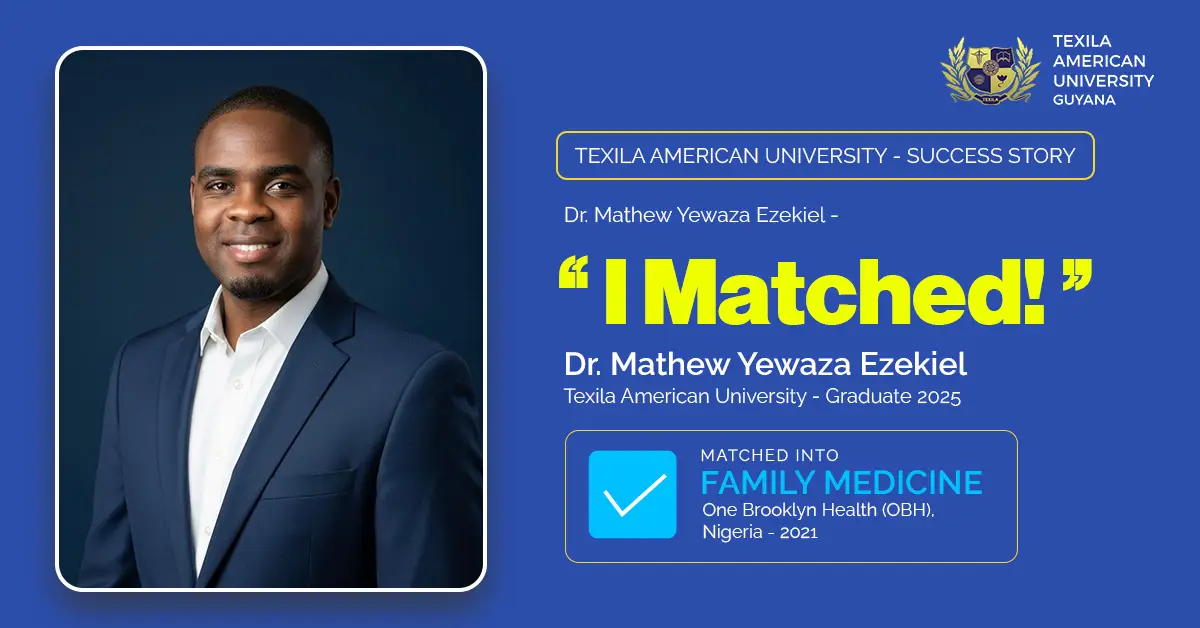
Dr. Mathew Yewaza Ezekiel graduated from Texila American University, Guyana, in May 2021 and matched into a Family Medicine residency at One Brooklyn Health, New York. His journey shows what residency preparation really looks like behind the result: early planning, daily discipline, honest self-reflection, interview practice, and support from mentors, friends, and seniors.
A Journey Built on Purpose
For Dr. Mathew Yewaza Ezekiel, matching into a Family Medicine residency in the United States was not just about reaching the next academic milestone. It was about becoming the kind of doctor who could handle pressure, learn from strong clinical systems, and eventually use that experience to serve communities back home.
After graduating from Texila American University Guyana in May 2021, Dr. Mathew went on to secure a Family Medicine residency at One Brooklyn Health, New York. Coming from Nigeria, his journey carried both personal ambition and a larger sense of responsibility.
I wanted better training and more hands-on experience. The US system pushes you to think, act fast, and grow. I also want to bring those skills back home and improve care here.”
- That clarity helped him stay focused through a process that can often feel long, uncertain, and demanding.
Preparing Before the Pressure Builds
- Dr. Mathew did not wait until the deadlines were close before taking the residency process seriously. He began with his exams, especially Step 2, and made question practice part of his daily routine.
I focused on my exams first, especially Step 2. I did a lot of question practice every day. Then I worked on my CV, personal statement, and got my documents ready early so I wouldn’t rush.”
This early preparation gave him room to improve his application instead of simply trying to finish it. His CV, personal statement, and documents were not treated as last-minute tasks. They were part of the same journey as his exam preparation.
For students aiming for a US medical residency after studying medicine in Guyana or an international medical school, this kind of planning can make the process less overwhelming. But for Dr. Mathew, it was not about having a perfect plan from day one. It was about starting early enough to correct, refine, and keep moving.
Balancing Work, Study, and Self-Doubt
The hardest part of the journey was not one single exam or one interview. It was managing everything at once.
Time was a big problem. I had work and study at the same time. I made a daily plan and stuck to it. Some days were hard, but I stayed consistent.”
Like many medical students and international medical graduates, Dr. Mathew had to prepare while handling other responsibilities. There were days when the workload felt heavy, but he relied on structure rather than motivation alone.
I treated studying like a job. I gave myself set hours every day. I cut out distractions and focused on what mattered most.”
That routine became one of the most important parts of his preparation. He did not depend on long bursts of energy. He focused on showing up every day, even when progress felt slow.
Learning to Speak with Confidence
Residency interviews brought a different kind of challenge. It was no longer only about what he knew, but how clearly he could communicate who he was, what he had experienced, and why he was ready. Dr. Mathew prepared by practising common interview questions with friends and seniors. He also watched videos and worked on speaking calmly and confidently.
I practiced common questions with friends and seniors. I also watched videos and learned how to speak clearly and confidently.”
What surprised him was that the strongest interview moments did not feel overly formal.
One interview felt like a normal conversation, not a test. It taught me to relax and be myself instead of trying too hard.”
That experience changed the way he approached interviews. Instead of trying to sound perfect, he focused on being clear, honest, and grounded.
Presenting Real Strengths, Not Perfect Answers
When it came to talking about his strengths, Dr. Mathew did not try to create an exaggerated version of himself. He spoke about real patient-care experiences, how he handled pressure, and what he had learned along the way.
I was honest. I talked about my real experiences working with patients and how I handle pressure. I showed that I’m hardworking and willing to learn.”
That honesty made his answers stronger. In a field like Family Medicine, where communication, empathy, adaptability, and long-term patient care matter deeply, real experiences can often speak more powerfully than polished statements.
The People Who Helped Him Keep Going
Dr. Mathew is clear that this was not a journey he completed alone. Mentors at Texila, friends, and seniors all played a role in helping him stay prepared and encouraged.
They helped a lot. They guided me, reviewed my documents, and encouraged me when I felt stressed. I didn’t do this alone.”
Their support helped him see the process more clearly. They reviewed his documents, helped him prepare, and encouraged him when the journey felt stressful. For many students, this kind of support can make a major difference. Residency preparation can feel isolated, especially when the outcome is uncertain. Having people who understand the process can help students stay steady through the difficult parts.
His Advice to Future Residency Aspirants
When asked what he would tell students who are just beginning their residency journey, Dr. Mathew keeps his advice simple.
Start early. Stay consistent. Don’t compare yourself too much. Focus on your own path and keep going, even when it feels slow.”
That advice reflects the way he approached his own preparation. He did not build his path by comparing himself with others. He focused on what he could control: his study schedule, his application, his interview practice, and his mindset. The residency journey can easily make students feel like they are behind. Someone else may seem to be scoring higher, applying faster, or moving with more confidence. Dr. Mathew’s experience shows that steady progress still matters, even when it does not feel dramatic.
Looking Ahead
For Dr. Mathew, matching residency is not the end of the story. It is the next stage of his growth as a physician.
I want to become a strong, safe doctor. I want to gain skills, help patients, and later give back by improving healthcare in my home country.”
His journey from Nigeria to Texila American University, Guyana, and then to a Family Medicine residency in New York is not only a story of academic success. It is a story of purpose, discipline, and the desire to use medical training in a meaningful way.
Key Takeaways from Dr. Mathew’s Journey
- Start preparing early for exams, documents, and interviews.
- Treat daily study time as a serious commitment.
- Practise interviews with friends, seniors, or mentors.
- Use real clinical experiences when presenting your strengths.
- Ask for help early and build a strong support system.
- Avoid comparing your timeline with someone else’s.
- Stay consistent, even when progress feels slow.
FAQ:
Who is Dr. Mathew Yewaza Ezekiel?
Dr. Mathew Yewaza Ezekiel is a Nigerian graduate of Texila American University, Guyana, who graduated in May 2021 and matched into Family Medicine residency at One Brooklyn Health, New York.
How did Dr. Mathew prepares for residency?
He focused first on USMLE Step 2 preparation, practised questions daily, prepared his CV and personal statement early, and worked on interview readiness with friends and seniors.
What was the biggest challenge in his residency journey?
His biggest challenge was balancing work and study. He managed it by creating a daily plan, setting fixed study hours, and staying consistent.
What advice does he give to future residency aspirants?
His advice is to start early, stay consistent, avoid unhealthy comparison, focus on your own path, and keep going even when progress feels slow.